From Landfill to Loop: How Battery Recycling Is Quietly Reinventing American Mining
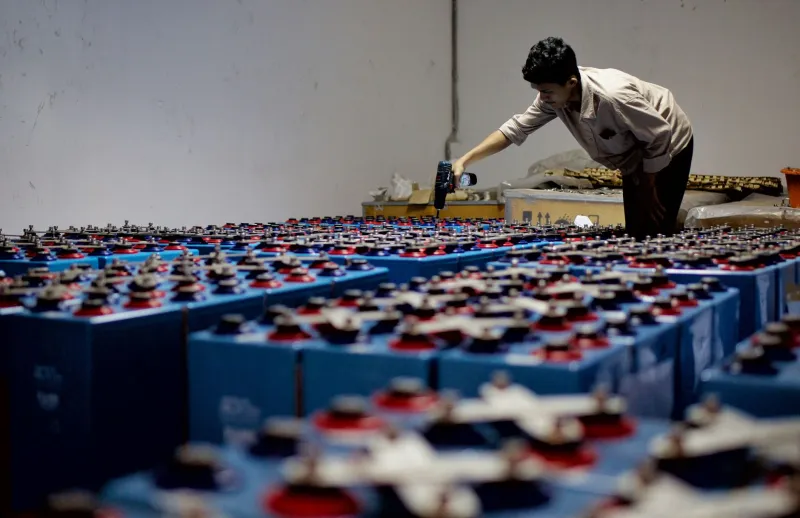
Somewhere in a warehouse outside of Detroit, thousands of spent electric vehicle battery packs are stacked floor to ceiling, waiting. They are the byproduct of a transportation revolution that has reshaped American roads over the past decade. They are also, increasingly, regarded as something far more valuable than waste: a domestic ore body, rich in lithium, cobalt, nickel, and manganese — the very materials that make the clean energy transition possible.
The United States is approaching a critical inflection point. As the first major wave of EVs sold in the early 2010s reaches end-of-life, and as adoption continues to accelerate under federal incentive programs, the volume of spent batteries entering the waste stream is projected to reach staggering proportions. By 2030, analysts estimate that more than 500,000 metric tons of lithium-ion batteries will retire each year in North America alone. What happens to them will define, in no small part, how sustainable the green energy economy actually proves to be.
The Hidden Cost of Clean Energy
The environmental promise of electric vehicles is genuine and well-documented. Over a vehicle's lifetime, an EV produces significantly fewer greenhouse gas emissions than its internal combustion counterpart — even when the electricity grid still carries a fossil fuel mix. But the supply chain behind those vehicles tells a more complicated story.
Lithium mining in Chile's Atacama Desert consumes billions of liters of water in one of the driest ecosystems on Earth. Cobalt extraction in the Democratic Republic of Congo has been linked to serious human rights abuses and severe ecological damage. Nickel processing generates toxic sulfur dioxide emissions at facilities across Indonesia and Russia. The minerals powering America's clean transportation future are, in many cases, arriving via supply chains that carry their own substantial environmental and social costs.
This is precisely the contradiction that battery recycling promises to resolve. If the materials already embedded in retired cells can be recovered efficiently and reintroduced into new battery production, the pressure on primary mining operations diminishes — and the circular economy that sustainability advocates have long championed begins to take tangible shape.
What the New Recyclers Are Building
A cohort of companies is now racing to industrialize battery recycling at meaningful scale, deploying technologies that range from refined versions of metallurgical tradition to genuinely novel chemical processes.
Redwood Materials, founded by former Tesla chief technology officer JB Straubel and headquartered in Nevada, has emerged as perhaps the most prominent player in the domestic recycling space. The company's approach focuses on hydrometallurgical processing — using water-based chemical solutions to dissolve and selectively recover individual elements from shredded battery material. Redwood has announced partnerships with major automakers including Ford and Volkswagen, and has secured federal loan guarantees to expand its South Carolina processing facility. The company claims it can recover more than 95 percent of the critical minerals in a spent cell.
Li-Cycle, a Canadian firm with significant operations in the United States, employs a two-stage process it calls Spoke & Hub. Batteries are first mechanically processed at regional Spoke facilities into a slurry of mixed materials known as black mass. That black mass is then shipped to a central Hub facility — the company's flagship plant is under development in Rochester, New York — where hydrometallurgical refining extracts battery-grade materials ready for reuse.
A third approach, pursued by companies including Ascend Elements and Battery Resources, pushes the process even further through a technique called direct cathode recycling. Rather than breaking recovered materials all the way down to their elemental components and rebuilding them from scratch, direct recycling attempts to preserve the crystalline structure of cathode materials, potentially reducing the energy intensity of the recycling process significantly.
Each approach carries trade-offs in cost, energy consumption, material purity, and scalability. No single method has yet established clear dominance, and the competitive landscape remains genuinely open.
The Policy Architecture Taking Shape
The federal government has recognized battery recycling as a strategic priority, and the policy environment has shifted accordingly. The Inflation Reduction Act, signed into law in 2022, included provisions requiring that an increasing proportion of the critical minerals in EV batteries sold in the United States originate either from domestic sources or from free trade agreement partners — a definition that the Treasury Department has extended to include recycled content. This creates a direct financial incentive for automakers to source recycled lithium and cobalt, since batteries meeting those thresholds qualify buyers for the full $7,500 EV tax credit.
The Department of Energy has simultaneously deployed billions of dollars in loan guarantees and grant funding toward battery recycling infrastructure through its Loan Programs Office. The ReCell Center, a DOE-funded research consortium anchored at Argonne National Laboratory outside Chicago, continues to advance the fundamental science underlying next-generation recycling techniques.
At the state level, California has implemented extended producer responsibility regulations requiring battery manufacturers to fund end-of-life collection and recycling programs — a model that advocates are pushing other large states to adopt.
The Barriers That Remain
For all the momentum building behind battery recycling, the industry faces obstacles that are neither trivial nor easily dismissed.
Collection logistics represent perhaps the most immediate bottleneck. Unlike aluminum cans or cardboard, spent lithium-ion batteries — particularly the large packs from electric vehicles — are heavy, chemically reactive, and potentially hazardous during transport. Building a nationwide network of drop-off and pickup infrastructure capable of routing retired batteries to processing facilities efficiently is an enormous logistical undertaking, and that network does not yet exist at the scale required.
Economics present a second challenge. The price of battery-grade lithium carbonate, like all commodities, fluctuates substantially. When lithium prices are high, recycling operations are profitable and investment flows readily. When prices fall — as they did sharply in 2023 and into 2024 — the margin calculations become far more difficult, and some projects have faced delays or financing difficulties as a result. Building an industry that can remain viable across commodity price cycles requires either technological cost reductions or policy supports that provide a floor beneath recycled material values.
Finally, battery chemistry itself is not static. The cathode formulations that dominate today's market — NMC, NCA, LFP — each require somewhat different recycling approaches, and the industry is already anticipating the arrival of next-generation chemistries including solid-state batteries. Recycling facilities optimized for today's cells may require costly retrofits to handle tomorrow's.
Closing the Loop
The vision animating the battery recycling industry is, at its core, an ecological one: a materials economy in which the minerals enabling clean energy circulate continuously rather than moving in a straight line from mine to product to landfill. That vision is not yet reality. The infrastructure is nascent, the economics are volatile, and the policy framework, while improving, remains incomplete.
But the direction of travel is unmistakable. Investment is flowing, technology is advancing, and the regulatory environment is increasingly aligned with circular economy principles. The spent batteries accumulating in warehouses across the country represent not merely a disposal problem but a strategic resource — one that, managed well, could reduce America's dependence on environmentally damaging extraction while strengthening domestic supply chains for the clean energy materials the coming decades will demand.
The mining industry's next frontier may not be a remote mountain range or a lithium brine flat in the high desert. It may be sitting in a parking garage, waiting to be plugged in one final time.