Pumping Heat, Not Carbon: The Quiet Revolution Reshaping How Americans Warm Their Homes
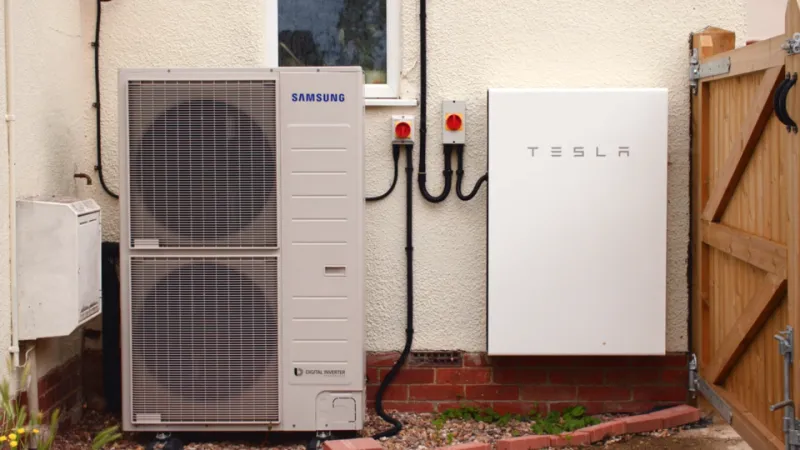
Photo: Cosy Homes Oxfordshire, CC BY-SA 4.0, via Wikimedia Commons
On a January morning in Columbus, Ohio, Jennifer Marsh woke to a house that was warm, quiet, and — for the first time in twenty years of homeownership — heated without burning a single cubic foot of natural gas. Her newly installed heat pump had run overnight, drawing thermal energy from frigid outdoor air and delivering it inside at a fraction of what her old furnace had cost to operate. "I kept waiting for the catch," she said. "There wasn't one."
Marsh's experience is becoming less exceptional by the month. Across the United States, heat pump installations are surging at a pace that industry analysts once reserved for optimistic projections. In 2023, heat pumps outsold gas furnaces in the US for the second consecutive year — a milestone that would have seemed implausible a decade ago. The technology behind this shift is not new, but the economic and political conditions enabling its mass adoption very much are.
What a Heat Pump Actually Does
The term "heat pump" is, admittedly, not the most evocative name for a device that may define the next era of American home energy. Unlike a furnace, which generates heat by combusting fuel, a heat pump moves heat — extracting it from outdoor air, ground, or water and transferring it indoors. In summer, the process reverses, functioning as an air conditioner. One device, year-round climate control, and dramatically lower energy consumption.
Modern air-source heat pumps — the most common residential variety — are capable of delivering two to three units of heat energy for every unit of electrical energy consumed. That efficiency ratio, measured as a coefficient of performance, means that even in regions where the electrical grid still relies partly on fossil fuels, heat pumps frequently produce lower net carbon emissions than gas heating. As the US grid continues its ongoing transition toward renewable generation, that advantage compounds over time.
Cold-climate heat pump models, engineered specifically for northern states, now operate efficiently at outdoor temperatures as low as minus 13 degrees Fahrenheit. The old objection that heat pumps "don't work in cold climates" has been rendered largely obsolete by a new generation of variable-speed compressor technology.
The Economics of Switching
For most American households, the financial case for heat pumps has shifted decisively in recent years. The Inflation Reduction Act of 2022 introduced federal tax credits covering 30 percent of heat pump installation costs, up to $2,000 annually. The law also established rebates through the High-Efficiency Electric Home Rebate Act, or HEEHRA, which can provide up to $8,000 for qualifying low- and moderate-income households. Several states — including California, Massachusetts, New York, and Colorado — have layered additional incentives on top of federal programs, in some cases bringing net installation costs below $3,000 for a standard single-family home.
Operating savings are equally compelling. The US Department of Energy estimates that heat pumps can reduce home heating costs by 50 percent compared to electric resistance heating and by 30 to 40 percent compared to gas furnaces in most climate zones. Over a typical system lifespan of 15 to 20 years, those savings accumulate into thousands of dollars per household.
Utility companies are beginning to respond. Duke Energy, Xcel Energy, and a growing number of regional providers have launched dedicated heat pump rebate programs, recognizing that distributed, efficient electric heating can reduce peak grid demand more effectively than many supply-side investments.
The Installation Challenge — and How the Industry Is Responding
The transition is not without friction. A persistent shortage of certified heat pump installers has created wait times of several months in high-demand markets. Traditional HVAC contractors trained primarily on gas systems require retraining, and the ductwork configurations in older American homes sometimes require modification to accommodate heat pump airflow characteristics.
The workforce gap is drawing serious policy attention. The Department of Labor has allocated funds through the Bipartisan Infrastructure Law to expand HVAC apprenticeship programs with a heat pump focus, and organizations such as the Building Performance Institute are accelerating credentialing pipelines. Industry groups project that the US will need to train an additional 50,000 heat pump technicians by 2030 to meet projected demand.
For homes without existing ductwork — a common scenario in older urban row houses and rural properties — mini-split heat pumps offer a ductless alternative. These wall-mounted units require only a small conduit penetration through an exterior wall, making retrofits far less invasive and expensive than installing an entirely new duct system.
Real Homeowners, Real Results
Beyond Jennifer Marsh's Columbus home, the testimonials accumulating across owner forums, community energy programs, and utility pilot projects tell a consistent story. In rural Vermont, where propane heating costs have historically been punishing, the state's heat pump incentive program has driven adoption rates that now rank among the highest per capita in the nation. In Atlanta, homeowners replacing aging central air systems are discovering that a heat pump handles both their heating and cooling needs at lower annual cost than the two separate systems they previously maintained.
There are, of course, edge cases. Very large older homes with poor insulation may require significant weatherization investment before a heat pump performs optimally. In regions where electricity rates are unusually high relative to natural gas prices — parts of the rural Midwest, for example — the payback calculation can be less straightforward. Energy advocates consistently recommend a whole-home energy audit before installation to ensure the investment is properly sized and sequenced.
The Broader Climate Equation
Residential heating and cooling account for roughly 13 percent of total US greenhouse gas emissions. Electrifying that sector through heat pump adoption is, according to analyses from the Rocky Mountain Institute and the Lawrence Berkeley National Laboratory, one of the highest-impact actions available to individual American households. Unlike rooftop solar, which requires specific roof orientation and structural conditions, heat pumps are viable in the vast majority of US housing stock.
The trajectory is clear. Heat pump shipments in the United States grew by more than 15 percent in 2023 alone. Major manufacturers — including Carrier, Trane, Bosch, and Mitsubishi — are expanding domestic production capacity in anticipation of sustained demand growth. The question is no longer whether heat pumps will become the dominant residential climate control technology in the United States. The question is how quickly the infrastructure, workforce, and policy frameworks can scale to meet a transition that, for many American families, is already underway.
For Jennifer Marsh, the answer arrived quietly, on a cold Ohio morning, without ceremony or combustion.