Wired for Tomorrow: Why Modernizing America's Electrical Grid Is the Missing Key to a Renewable Future
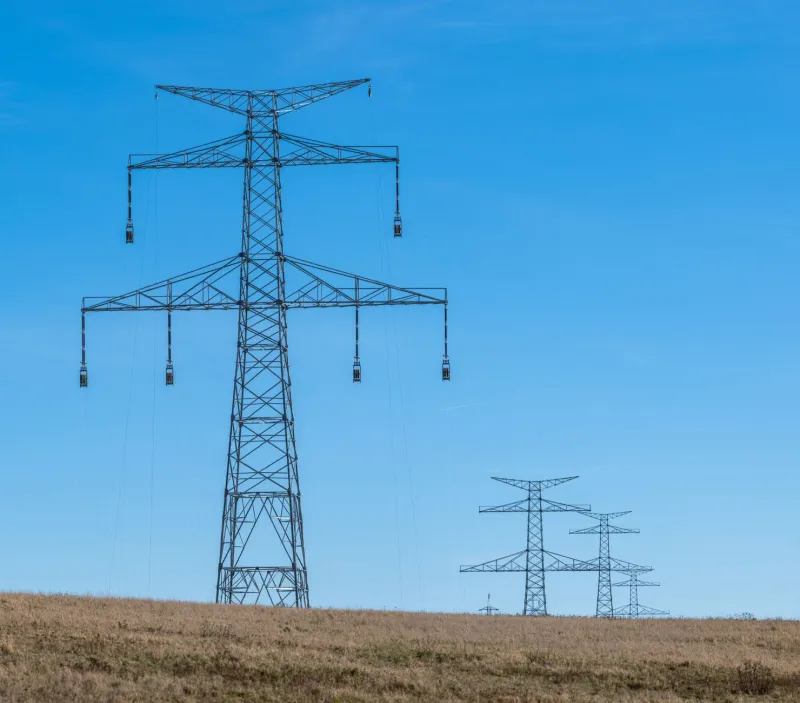
Somewhere between the wind turbines spinning across the Texas panhandle and the solar arrays blanketing California's Central Valley, something is being lost. Not energy, exactly — but potential. The electricity that could be powering millions of American homes is instead curtailed, wasted, or simply never generated, because the infrastructure tasked with carrying it was engineered for a world that no longer exists.
The United States electrical grid is, by most technical assessments, a marvel of the 20th century operating under the demands of the 21st. Built around the logic of large, centralized coal and natural gas plants that produce steady, predictable flows of power, it was never designed to accommodate the distributed, variable nature of renewable generation. Wind does not blow on command. The sun does not shine at peak demand. And a grid that cannot adapt to those realities will remain a bottleneck — regardless of how many solar panels or wind farms are connected to it.
The good news is that a growing coalition of engineers, utility executives, policymakers, and clean energy advocates believes the bottleneck can be broken. The tools to do it already exist. What has been lacking, until recently, is the political will, the investment capital, and the regulatory framework to deploy them at the speed the climate crisis demands.
A Grid Built for Another Era
To understand why modernization is so urgent, it helps to appreciate just how old the existing system truly is. Much of America's high-voltage transmission infrastructure dates to the 1960s and 1970s. The average large power transformer — the critical equipment that steps voltage up and down across long distances — is more than 40 years old, well past its intended operational lifespan. The American Society of Civil Engineers has repeatedly graded the nation's energy infrastructure with a near-failing score, citing chronic underinvestment and mounting vulnerability to extreme weather events.
Beyond age, the architecture itself is the problem. Traditional grids were designed as one-way streets: power flows from large plants to substations to homes and businesses. Renewable energy, by contrast, is inherently bidirectional and decentralized. A neighborhood blanketed in rooftop solar panels is simultaneously a consumer and a producer. Battery storage systems charge and discharge based on real-time conditions. Electric vehicles add millions of mobile, semi-predictable loads. Managing that complexity with analog-era infrastructure is, as one grid engineer famously put it, like trying to run the internet on telegraph wire.
The Technologies Rewriting the Rules
The emerging generation of grid technologies is specifically engineered to handle that complexity — and in some cases, to turn it into an asset.
Smart transformers, sometimes called solid-state transformers, replace bulky electromagnetic equipment with compact, digitally controlled devices capable of responding to grid conditions in milliseconds. Unlike their predecessors, they can regulate voltage dynamically, accommodate bidirectional power flows, and integrate directly with digital management systems. Pilot programs in North Carolina and California have demonstrated their ability to smooth out the fluctuations that make renewable-heavy grids difficult to manage.
AI-powered load balancing is perhaps the most consequential innovation currently being deployed. Utilities including Pacific Gas & Electric and Duke Energy have begun integrating machine learning platforms that analyze weather forecasts, historical consumption data, real-time sensor feeds, and even social patterns to predict demand with extraordinary precision — and to adjust supply accordingly, often before a human operator would even notice a problem. The result is a grid that anticipates stress rather than merely reacting to it.
Distributed energy storage completes the picture. Grid-scale battery installations — led by projects like the Moss Landing Energy Storage Facility in California, currently among the largest in the world — allow utilities to bank surplus renewable generation during periods of peak production and release it during high-demand windows. At the residential level, home battery systems such as the Tesla Powerwall are enabling individual households to participate in what grid operators call "virtual power plants": networks of small storage units that collectively function like a conventional generating station, dispatchable on demand.
States Leading the Charge
While federal momentum has accelerated since the passage of the Inflation Reduction Act — which allocated tens of billions of dollars toward grid modernization — it is at the state level where the most instructive experiments are underway.
California has mandated that its investor-owned utilities develop and deploy distributed energy resource management systems, software platforms that coordinate thousands of small generators, storage units, and flexible loads as a coherent whole. The state's grid operator, CAISO, now routinely manages situations in which solar power provides more than 100 percent of instantaneous demand — a scenario that would have been destabilizing on a conventional grid but is increasingly routine on California's modernized network.
Texas, despite its political reputation, has emerged as a laboratory for grid-edge innovation driven largely by market forces. The deregulated ERCOT market has incentivized the rapid deployment of both utility-scale wind and battery storage, making the state the nation's largest producer of wind energy. The catastrophic 2021 winter storm exposed serious vulnerabilities in weatherization and fuel supply — but it also accelerated investment in resilience technologies that are now being studied by utilities nationwide.
In the Midwest, Ameren Missouri has launched a comprehensive grid modernization initiative that includes smart meters for nearly all customers, an advanced distribution management system, and targeted investments in transmission capacity designed to unlock the region's vast wind resources in rural areas that currently lack the infrastructure to export power to urban demand centers.
The Policy Gap That Remains
Technology alone will not complete this transition. The regulatory structures governing how utilities earn returns on investment, how transmission projects are approved, and how new generators interconnect with the grid were all designed for a different energy paradigm — and many remain stubbornly resistant to change.
The Federal Energy Regulatory Commission has taken meaningful steps in recent years, including Order 2023, which aims to reform the notoriously slow and backlogged interconnection queue that has left hundreds of gigawatts of renewable projects waiting years for grid access. But critics argue the reforms do not go far enough, and that the fundamental economics of utility regulation — which traditionally reward capital investment in physical infrastructure rather than efficiency or innovation — must be restructured to align utility incentives with decarbonization goals.
Permitting reform is another persistent obstacle. New transmission lines, essential for moving renewable power from where it is generated to where it is consumed, can take a decade or more to site, permit, and build. Streamlining that process without sacrificing environmental review standards is one of the defining policy challenges of the energy transition.
The Grid as Climate Infrastructure
Framing electrical grid modernization as an environmental issue may seem counterintuitive — it is, after all, a story about wires and software and regulatory proceedings. But the connection is direct and consequential. Every wind farm that cannot export its power because transmission capacity is constrained is a missed opportunity to displace fossil fuel generation. Every solar installation curtailed during periods of excess production is clean energy that will be replaced by gas-fired peaker plants when the sun goes down.
The grid, in this sense, is not merely infrastructure. It is the operating system of the energy transition — and its limitations are, right now, one of the most significant barriers standing between the United States and its climate commitments. Modernizing it is not a technical footnote to the renewable energy story. It is the story.