Leaking Into the Future: The Abandoned Gas Stations Poisoning America's Ground — and the Communities Fighting Back
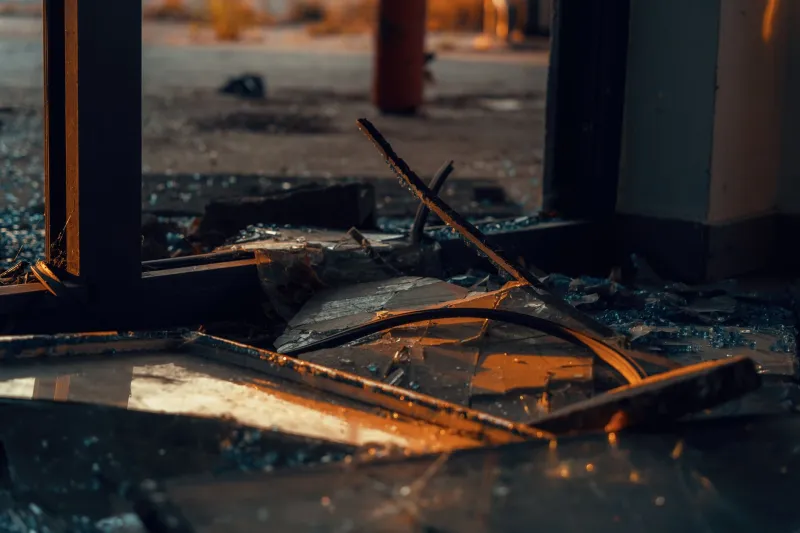
They sit at the corners of American life — shuttered, faded, their canopies rusting above cracked concrete aprons. Former gas stations haunt the streetscapes of nearly every city and town in the United States, numbering somewhere between 60,000 and 200,000 abandoned sites depending on the methodology used to count them. They are monuments to a fossil-fuel economy that is slowly receding, but their environmental legacy is anything but passive.
Below many of these sites, unseen and largely unaddressed, a slow-motion contamination crisis is unfolding.
The Chemistry of Neglect
When a gas station closes — whether from bankruptcy, corporate consolidation, or the gradual collapse of demand in a rural community — the underground storage tanks that once held thousands of gallons of gasoline don't simply disappear. Steel tanks installed before the 1980s corrode. Fiberglass models crack. Fittings fail. And when they do, the hydrocarbons they contain migrate outward and downward, entering the soil column and, eventually, the groundwater.
The contaminants involved are not benign. Benzene, a known human carcinogen, is among the most concerning compounds found in petroleum releases. Toluene, ethylbenzene, and xylene — collectively known as BTEX compounds — accompany it. So do methyl tert-butyl ether, or MTBE, a fuel additive that is particularly mobile in groundwater and notoriously difficult to remediate. In communities that rely on private wells or shallow municipal aquifers, the proximity of a leaking underground storage tank can mean the difference between clean drinking water and a public health emergency.
The Environmental Protection Agency maintains a database of leaking underground storage tank sites — commonly abbreviated as LUST sites — and the numbers are sobering. As of recent reporting, more than 500,000 releases have been confirmed nationally since the program's inception, with tens of thousands still awaiting cleanup. The agency estimates that roughly one in three confirmed releases has not yet been fully addressed.
For low-income communities and communities of color, the burden is disproportionate. Research consistently shows that contaminated sites are more likely to be located in neighborhoods that lack the political capital or legal resources to compel rapid remediation, meaning the people least responsible for the contamination are often the most exposed to its consequences.
The Regulatory Labyrinth
Cleaning up a brownfield gas station is rarely straightforward. Responsibility for remediation typically falls first to the last owner of the property — but when that owner has dissolved, died, or declared bankruptcy, the chain of liability frays quickly. State environmental agencies often inherit the obligation, but their cleanup funds are chronically underfunded relative to the scale of the problem.
The EPA's Brownfields Program offers grants and technical assistance for site assessment and cleanup, and it has catalyzed significant redevelopment activity since its expansion in the early 2000s. But grant funding is competitive, and smaller municipalities — often the ones sitting atop the oldest and most neglected stations — frequently lack the grant-writing capacity to compete effectively against larger cities with dedicated environmental staff.
Property ownership itself presents another barrier. Prospective developers are often reluctant to acquire contaminated parcels, fearing that taking title to the land will expose them to cleanup liability even if they had no role in creating the contamination. Several states have enacted voluntary cleanup programs with liability protections designed to address this concern, but awareness of these programs remains uneven, particularly among community-based organizations that might otherwise be well-positioned to lead redevelopment efforts.
From Pump to Park: Repurposing in Practice
Despite these obstacles, a growing number of communities are demonstrating that the transformation of abandoned gas stations into productive, green-oriented uses is not merely aspirational — it is achievable.
In Detroit, long a laboratory for urban reinvention, several former station sites have been converted into community gardens managed by neighborhood nonprofits. The process is not without complexity: soil remediation must precede any food-producing use, and raised bed designs that isolate plants from residual contamination are often employed as an interim measure. But the social returns — fresh produce in food-insecure neighborhoods, green space in densely paved corridors, community ownership of formerly blighted land — are significant.
Across the country, transportation planners and clean energy advocates are eyeing another category of repurposing: electric vehicle charging hubs. The logic is elegant. Gas stations were strategically sited for accessibility and traffic flow; many sit on corner lots with excellent visibility and existing utility connections. Converting them into fast-charging stations preserves their original function within the transportation network while eliminating the petroleum infrastructure entirely. Several states, including California and New York, have begun piloting grant programs specifically designed to facilitate this transition, recognizing that equitable EV infrastructure requires charging access in urban neighborhoods that may lack the private parking where home charging typically occurs.
Smaller-scale interventions are also gaining traction. Pocket parks, bioswales, and pollinator gardens have been installed on remediated station footprints in cities from Baltimore to Phoenix. These projects rarely make national headlines, but they represent a meaningful form of ecological repair — converting impermeable, contaminated surfaces into permeable, living ones that filter stormwater, support biodiversity, and offer residents a measure of respite in neighborhoods where green space has historically been scarce.
The Economic Calculus
The financial case for redevelopment is strengthening as remediation technologies improve and federal investment in clean energy infrastructure grows. The Inflation Reduction Act, passed in 2022, allocated significant resources for brownfield cleanup and reinvestment, including provisions that specifically incentivize clean energy development on contaminated lands. For gas station sites, this creates a potentially powerful alignment of incentives: federal dollars available for cleanup, combined with tax credits for EV infrastructure or solar installation, can substantially alter the economics of projects that might otherwise appear marginal.
Philanthropy and community development finance institutions are increasingly active in this space as well, recognizing that brownfield redevelopment sits at the intersection of environmental justice, public health, and economic revitalization — a convergence that aligns with the priorities of a growing range of funders.
Still, the pace of transformation remains slow relative to the scale of the problem. For every abandoned station converted into a garden or a charging hub, dozens more sit untouched, their tanks continuing to corrode, their plumes continuing to migrate.
A Corner Worth Reclaiming
The abandoned gas station is, in many respects, a perfect emblem of the fossil-fuel transition: a structure built for one energy era, now stranded in another, its costs externalized onto the communities and ecosystems around it. But it is also, potentially, an opportunity — a piece of well-located urban land that, with sufficient political will, financial creativity, and technical expertise, can be reclaimed for purposes that serve both people and the planet.
The question is not whether these sites can be transformed. The evidence that they can is already accumulating, corner by corner, across the American urban landscape. The question is whether the regulatory frameworks, funding mechanisms, and community capacity required to accelerate that transformation can be assembled quickly enough to prevent the contamination from deepening while the debate continues.
For the groundwater beneath these sites, time is not a neutral variable.