Drilling Deeper: How the Coalfields of Appalachia and the West Are Staking Their Future on Geothermal Energy
The language of energy transition is often the language of departure — of industries shuttered, of workers displaced, of towns left to negotiate a future that bears little resemblance to the past. It is a narrative that coal communities across the United States know intimately, and one that has, for many of them, produced more anxiety than opportunity.
But a different story is beginning to take shape in some of America's most coal-dependent regions — one in which the transition to clean energy is not a rupture with the past but an extension of it. Geothermal energy, which harnesses the heat stored in the earth's crust to generate electricity and provide direct heating, is emerging as a sector in which the skills, infrastructure, and geological intimacy that coal communities possess are not liabilities to be overcome but assets to be leveraged.
The Geological Inheritance
Coal mining is, at its core, a geological enterprise. The workers who have spent careers extracting coal from the earth understand subsurface formations, rock mechanics, groundwater behavior, and the engineering challenges of working thousands of feet below the surface. The companies and communities that supported them have built supply chains, equipment fleets, and training institutions oriented around that knowledge.
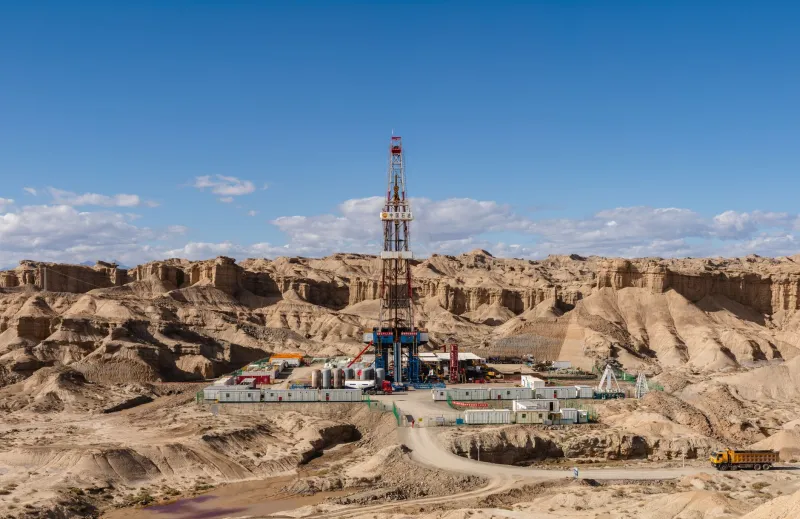
Geothermal energy development requires a strikingly similar skill set. Drilling deep wells into the earth, managing the pressures and temperatures encountered at depth, interpreting geological surveys, and maintaining complex subsurface infrastructure are tasks that transfer with relatively modest retraining from coal mining to geothermal production. This transferability is not merely theoretical — it has been documented in analogous transitions in other energy sectors, most notably the pivot of oil and gas drilling crews to geothermal projects in states like Nevada and California.
What has historically limited geothermal development to a narrow geographic band — the hydrothermal systems of the western United States, where naturally occurring hot water and steam reach the surface or near-surface in accessible form — is now being challenged by technological advances that expand the viable geography of geothermal energy dramatically.
Enhanced Geothermal Systems: Unlocking a Continent's Heat
The most significant technological development reshaping the geothermal landscape is the emergence of enhanced geothermal systems, or EGS. Unlike conventional geothermal, which depends on naturally occurring permeable rock formations saturated with hot water, EGS creates the permeability artificially — drilling deep into hot dry rock, fracturing it hydraulically, and circulating water through the resulting reservoir to capture heat.
The implications for geography are profound. Hot dry rock exists nearly everywhere in the continental United States at sufficient depth; the question is whether drilling technology can reach it economically. Recent advances in directional drilling, borrowed in large part from the oil and gas industry's development of horizontal drilling for shale extraction, have dramatically reduced the cost of deep drilling. The Department of Energy's Enhanced Geothermal Shot initiative, launched in 2022, set an ambitious target of reducing EGS costs by 90 percent by 2035 — a goal that, if achieved, would make geothermal energy competitive across vast swaths of the country that have never before been considered viable.
For Appalachia, the geological profile is encouraging. The region sits atop significant heat resources at depths that are becoming increasingly accessible as drilling costs decline. A 2019 study by researchers at Southern Methodist University identified substantial EGS potential across Kentucky, West Virginia, Virginia, and Pennsylvania — precisely the states where coal employment has declined most sharply.
Communities at the Crossroads
The abstract promise of geothermal potential means little without concrete pathways for communities to access it. Several initiatives are now attempting to build those pathways.
In West Virginia, the Coalfield Development Corporation — a nonprofit that has spent years retraining coal workers for careers in construction, agriculture, and technology — has begun exploring partnerships with geothermal developers to create training pipelines specifically oriented toward subsurface energy work. The organization's model, which combines job training with social enterprise development, offers a template for integrating geothermal workforce development into the broader economic diversification strategies that coal communities are pursuing.
In Wyoming, where the coal industry has historically been dominated by surface mining rather than the underground operations typical of Appalachia, a different set of assets is in play. The state's existing oil and gas infrastructure — including drill rigs, service companies, and pipeline networks — is being eyed by geothermal developers as a ready-made foundation for project development. Wyoming's geological survey has been actively mapping geothermal resources, and the state legislature has passed legislation clarifying property rights for geothermal development, a necessary precondition for attracting private investment.
Perhaps the most closely watched development is underway in Beaver County, Utah, where a project by a company called Cyrq Energy has demonstrated that geothermal plants can be developed and operated by workforces drawn heavily from the region's existing energy sector. The project has become a reference point for advocates arguing that geothermal development can deliver on the promise of local job creation rather than importing specialized labor from outside the region.
The Economic Promise and Its Limits
The economic case for geothermal development in coal communities is compelling in outline, but requires careful qualification. Geothermal power plants, once constructed, are extraordinarily reliable — operating at capacity factors above 90 percent, compared to 25–35 percent for wind and solar — and they generate stable, long-term employment in plant operations and maintenance. Unlike the boom-and-bust cycles that have characterized coal and oil economies, geothermal production is not subject to commodity price volatility.
However, the capital costs of deep drilling remain substantial, and the exploration phase carries significant geological risk — a well that fails to encounter adequate heat or permeability represents a complete loss of the investment. Financing structures that can absorb this exploration risk, similar to the risk-sharing mechanisms that exist in oil and gas exploration, are still underdeveloped in the geothermal sector. Federal loan guarantees and grant programs administered through the Department of Energy are helping to bridge this gap, but the scale of available public financing remains modest relative to the investment required to meaningfully transform regional energy economies.
The timeline of transition also demands honesty. Geothermal development, even under optimistic assumptions about cost reduction and permitting efficiency, will not replace coal employment at the pace or scale that many communities need. It is one component of a diversified economic transition strategy, not a singular solution.
Reframing the Narrative
What may matter as much as the economics of geothermal development is the cultural and psychological reframing it offers. Coal communities have often experienced the energy transition as something imposed upon them — a set of market forces and policy decisions made elsewhere, by people with no stake in the consequences. The geothermal opportunity, framed correctly, positions these communities not as victims of transition but as essential participants in it: places whose knowledge, infrastructure, and workforce are uniquely suited to the clean energy economy that the country needs to build.
That reframing is not merely rhetorical. It shapes the political conditions under which transition policy is received, the willingness of workers to invest in retraining, and the capacity of communities to attract the private and public investment that geothermal development requires.
The earth beneath Appalachia and the western coalfields has been a source of energy for generations. The question now being asked — with increasing urgency and increasing evidence that the answer may be yes — is whether it can continue to be one, in a form that the climate can sustain.