The Underground Healers: How Fungi Are Being Deployed to Detoxify America's Most Poisoned Urban Soils
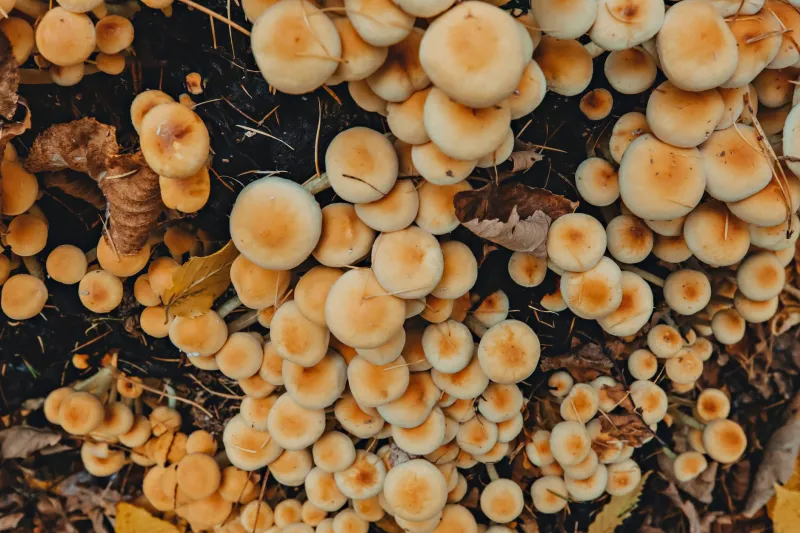
Long before mycology became a cultural phenomenon — before gourmet mushroom kits appeared on kitchen counters and before popular documentaries introduced millions of Americans to the concept of fungal intelligence — scientists working in obscurity were making a discovery with profound implications for environmental remediation. Fungi, it turns out, are extraordinarily capable chemists. And in some of America's most contaminated urban landscapes, they may be among the most powerful tools available for ecological repair.
What Fungi Do That Machines Cannot
To understand mycorestoration, it helps to understand what fungi actually are and how they interact with their environment. Unlike plants, fungi do not photosynthesize. They feed by secreting enzymes into their surroundings and absorbing the resulting nutrients — a process that, depending on the fungal species and the substrate involved, can break down an astonishing range of organic compounds.
The enzymes produced by certain fungi — particularly white-rot species such as Pleurotus ostreatus (the oyster mushroom) and Trametes versicolor (turkey tail) — are capable of cleaving the molecular bonds in some of the most recalcitrant pollutants known to environmental science. Polycyclic aromatic hydrocarbons, or PAHs, which accumulate in soils near former industrial sites, rail yards, and roads, are among the targets. So are certain petroleum derivatives, chlorinated solvents, and even some pesticides. The fungi do not merely sequester these compounds; they metabolize them, often converting them into carbon dioxide and water or into less toxic intermediate products.
This capacity — called ligninolytic activity, because it evolved originally to decompose lignin in wood — is one that no engineered remediation technology has yet replicated at comparable cost and ecological benefit. Conventional soil cleanup approaches, including excavation and off-site disposal, thermal treatment, and chemical oxidation, are effective but expensive, disruptive, and energy-intensive. A mycoremediation intervention, by contrast, can be initiated with inoculated substrate, wood chips, and straw — materials that cost a fraction of what mechanical remediation requires.
From Laboratory to Lot
The science of fungal remediation has been developing since at least the 1980s, when pioneering mycologist Paul Stamets began documenting the capacity of oyster mushrooms to degrade diesel fuel and other petroleum contaminants. Decades of subsequent laboratory research confirmed and extended these findings. But translating bench-scale results into field-scale outcomes has proven more challenging than early enthusiasm suggested.
Soil is a vastly more complex environment than a petri dish. Competing microbial communities, variable moisture and pH levels, the presence of multiple overlapping contaminant types, and the sheer heterogeneity of urban soils all affect how introduced fungal species perform. Early field trials produced inconsistent results, and the gap between laboratory promise and real-world performance tempered expectations within the scientific community.
In recent years, however, a new generation of practitioners has been closing that gap — not by abandoning fungi in favor of conventional methods, but by developing more sophisticated deployment strategies that account for site-specific conditions.
In Cleveland, a project led by a coalition of urban farmers, community land trust members, and mycologists from a regional university has been piloting oyster mushroom inoculation on vacant lots with documented hydrocarbon contamination. The protocol involves layering wood chip substrate inoculated with fungal spawn directly onto contaminated soil, maintaining moisture levels through drip irrigation, and monitoring contaminant concentrations over successive growing seasons. Preliminary results have shown measurable reductions in PAH levels, though researchers are careful to note that the timeline to full remediation is measured in years, not months.
In Detroit — a city whose industrial history has left vast stretches of soil chemically compromised — a nonprofit called the Fungi Futures Collective has been working with community gardeners to introduce mycoremediation as a complement to raised-bed growing systems. The approach recognizes that in neighborhoods where residents want to grow food now, waiting for full soil remediation is not a viable option. By combining fungal inoculation of the underlying contaminated soil with raised beds that protect food crops from direct contact, the project addresses both the immediate desire for community gardening and the longer-term goal of soil restoration.
The Science Behind the Mycelium
For all the practical experimentation underway, the scientific understanding of how fungi accomplish remediation continues to deepen. Researchers at several US universities are investigating the role of the fungal microbiome — the bacterial communities that colonize fungal hyphae — in enhancing degradation rates. It appears that certain bacteria traveling with fungal networks contribute their own enzymatic capabilities to the remediation process, suggesting that what is often described as mycoremediation is more accurately understood as a coordinated microbial consortium at work.
There is also growing interest in the potential for fungal networks to facilitate soil structure recovery alongside chemical detoxification. Contaminated urban soils are frequently compacted, hydrophobic, and biologically depleted — conditions that persist even after contaminant concentrations are reduced. Fungal hyphae, which extend through soil in filamentous networks, physically bind soil particles together, improve water infiltration, and create habitat for the microbial diversity that characterizes healthy soil. In this sense, mycorestoration may address not just the chemical legacy of contamination but the structural and biological impoverishment that accompanies it.
Barriers to Broader Adoption
Despite the promise of fungal remediation, significant barriers limit its adoption at the scale that urban contamination problems demand.
Regulatory frameworks for soil remediation were largely designed around conventional technologies, and many state environmental agencies lack established protocols for evaluating or certifying mycoremediation outcomes. Practitioners often find themselves in a bureaucratic gray zone, unable to obtain formal sign-off on remediation efforts that cannot be neatly categorized within existing regulatory categories. Developing standardized monitoring protocols and acceptance criteria for biological remediation approaches is a priority that environmental scientists and policymakers alike have identified as essential to mainstreaming the practice.
Funding presents another constraint. Mycorestoration projects are typically small-scale, community-based, and difficult to package in ways that attract conventional environmental remediation contracts. The philanthropic and public grant funding that has supported most projects to date is inherently limited and competitive. Integrating fungal remediation into municipal soil management programs — with dedicated budget lines and staff capacity — would represent a significant step toward scaling the approach.
Training and knowledge transfer also remain challenges. The practice requires a working understanding of fungal biology, site assessment, and monitoring methodology that is not yet widely distributed among the urban environmental practitioners who might otherwise apply it.
A Living Technology
What distinguishes mycorestoration from most environmental technologies is that it is alive. It responds, adapts, and — when conditions permit — expands. A successful fungal inoculation does not simply treat a site and conclude; it establishes a biological community that continues to function, evolve, and contribute to soil health long after the initial intervention.
In an era when the limitations of purely engineered solutions to ecological problems are increasingly apparent, there is something instructive about a remediation strategy that works by restoring biological complexity rather than imposing chemical or mechanical force. The fungi do not conquer contamination so much as they digest it — slowly, incrementally, and in ways that leave the soil more alive than they found it.
For American cities carrying the chemical weight of their industrial past, that distinction may matter more than it first appears.